What’s Next?

Prosperity vs. Recession

recession-prosperity-graph

Graph courtesy of Elliott Wave. One of the few economic commentators to predict the current economic crisis with deadly accuracy.

300 years of the biggest economic growth spurt in the history of mankind looks incredibly impressive. But what does the future hold?

When it comes to the economy the majority take the current recent trend and extrapolate it off into the distant future.

Just like in 1999 everyone expected the economy to boom beyond belief, in March 2009, the vast majority expected stocks to keep crashing hard. In both cases the exact opposite was true.

At the same time its incredibly to difficult to know when a bubble is going to burst, if it will keep growing, or when an economic collapse will suddenly bottom and turn into rapid growth.

What history teaches is that the more people believe in one direction, the less likely it is true. Don’t believe me? Go look at some newspaper headlines from 1999 or 1929, before the crashes – consensus remained upbeat. People don’t buy a newspaper if they disagree with it – newspapers tend to reflect the general feeling of their target audience.

The lesson is don’t expect the current trend to keep continuing. Sudden changes will quickly unfold and you need to forget the old times, and quickly adapt to the current situation that is unfolding. Don’t get caught in the trap.

Recession, depression or boom – there are major opportunities. Understand what is going on around you, and be prepared to adapt fast.

Don’t take the current trend and exprapolate it off into the far future.

Don’t get caught up in consensus and the general feeling. It is usually wrong at the worst times.


Making Money Online Economy Driven by Stock Market

A Boom Ahead?

A large number of social trends are closely tied in with the stock market and the economy. From short skirts being a sign of booming economies, to widespread disdain towards politicians in tough times, the world around us is closely linked to movements in the stock market.

Is it any surprise the economic boom of the sixties was swinging with leggy women? The late booming 1990s were just as full of long legs. It is really no surprise George Bush was pretty much universally and people could not wait to see the back of hum as stocks crashed through 2008.

No arm of society really escapes this phenomenon of stocks correlating social trends, and the online business world is no different.

Interest in making money online is one trend that appears to be swinging with the stock market turns.

The graph below shows how there has been more searches for the phrase ‘make money online’ in Google as the Dow Jones stock market has been dropping, and vice-versa.

make money online vs dow jones stock market

(data from Google Insights, annotation by Munchweb.com. Right axis shows price of the Dow Jones index)

Really this makes complete sense. When the stock market drops, the economy soon suffers, credit tightens, people have less money and jobs are lost. More people will look to alternative ways to make money like finding ways to earn money online.

Just a couple of quick notes:

  1. The internet is still a growing industry, so any downward movement in searches for making money online will likely be less than any upward movement, as there will be an underlying bias towards growth.
  2. We also could not expect the trend to match up perfectly in sync as short term events and news could create up or downward swings, although the overall link is still intact and visible over the longer term.

The graph above does match up to those two assumptions.

Where Next? Is Making Money Online Set to Boom?

Which direction stocks turn next should dictate whether interest in making money online will grow or decline. At the time of writing (early October 2010) several reliable future indicators of the stock market are strongly aligned to suggest a fall in stocks should happen soon, and such a fall should be at least a relatively large size (at the absolute least a 2000 point drop in the Dow).

It is not impossible for such indicators to remain at an extreme for a long time, but it does indicate that a downward trend in stocks is very likely on the horizon at some point, which will also see the economy resume a downward trend.

I prefer to leave stock market speculation to the experts, but should such a scenario play out, based on what else we know about larger social mood patterns and trends associated with a decline in stocks, when it comes to interest in making money online we can expect:

  • Interest in making money online to reach new peaks as people are faced with more difficult financial situations turn to alternative sources of revenue.
  • Interest will not peak until stock markets have bottomed. The peak will possibly come after the stock market bottom due to the delayed echo of damage that follows a fall in stocks. While the economy remains depressed interest in making money online will likely remain high.
  • With people desperately looking for quick and easy money spam will increase. This trend has already started.
  • The scam teachers of internet marketing will see a boom in clientele as more people desperate to make money buy their courses and products. Greed will drive more questionable marketing tactics and misleading sales pitches from unethical internet marketers.
  • Hatred for scammers and unethical internet marketers will increase both as a result, and also due to the need to find an enemy and assign blame that accompanies a downturn. A general distrust against internet marketers as a whole will grow considerably and the industry will be largely tarnished leaving the ethical members of the internet industry tarred with the same brush.
  • A boom in spam and scammers and a growth of hatred towards internet marketers will drive more rules and legislation on the internet business community.
  • A growth in communities (such as The Salty Droid) that name and shame online scammers and serve to protect people online will grow in terms of followers and aggression.
  • Record fines and punishments against online scammers and spammers will be delivered. While scammers and spammers have had somewhat of an easy ride during the boom times, they will eventually become a hated target if stocks drop far enough.
  • Competition will increase in the field of simple one-man online businesses while the struggling economy hampers the amount of money and ad revenue being spent online. Generally it will be a more difficult time for people new to the online industry to get started.
  • There will be a large growth in the available work-force for online work such as content writing and data entry. This will put downward pressure on wages for such positions. Companies such as Demand Media (aka eHow.com) and Mahalo that produce large farms of content online using cheap freelancers will continue to flourish and ultimately take market share from traditional media outlets.
  • Fewer people will produce online content simply for fun and fame. Community driven sites like Wikipedia and YouTube will see the rate of contributions decrease, and the rate of spam or made-for-marketing content increase.

While this is just fun (and hopefully insightful) speculation on the future, such trends completely depend on the stock market falling, and the severity of such trends greatly depends on how far stocks actually fall.

Where do you think the internet industry is heading?

Entrepreneurs in Recessions & Depressions

Business Opportunity During Economic Downturns

Recessions and depressions are always accompanied with reluctance towards new business opportunities. Society becomes focused on cutting back and trying to ensure financial survival.

However, as the crowd moves to the extreme in one direction the smart entrepreneur and investor dances to a different beat.


  • Just as most investors are buying stocks like crazy just before a big crash…
  • Just as everyone is piling up debt to buy an overpriced house just before the housing bubble bursts…
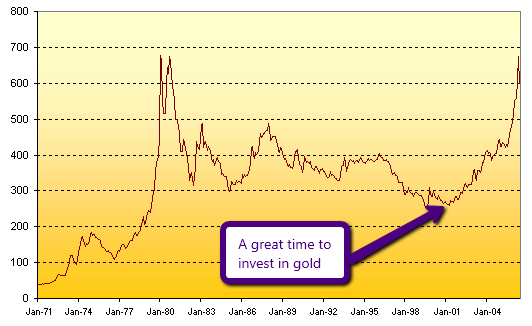
  • And just like nobody was buying gold back in 1999 just before it increased 400% in value over the next decade…

The crowd usually gets it wrong.

While spotting the important turning points is hugely difficult, it is safe to say when it comes to predicting future trends the majority of people screw up at the worst time to screw up.

When it comes to making decisions based on future trends, doing what everyone else is doing is rarely the right idea. It might work out for a short time, but usually ends up going wrong soon enough.

Going against the conventional wisdom when it comes to future trends, however short lived it might be, is difficult to do. It’s hard to ignore the millions of voices chanting the same conventional ‘wisdom’. But the more people chanting it, the more likely it is wrong.

Conventional wisdom tells most entrepreneurs and investors to avoid new businesses in a recession. The worse the recession gets and the longer it lingers, the more that idea becomes entrenched.

Starting or growing a business in a downturn is certainly not easy, far from it, that conventional wisdom is certainly coming from somewhere.

Investment is scarce, consumers are spending less, and taxes and regulations are on the rise. No wonder everyone thinks its a bad time to start a business.

But is it really?

There’s a Shake-Up of Opportunity, A Shift of Power

A downturn changes the playing field. What was once normal begins to change rapidly. Companies that got comfortable like a retired grandad in his chair, aren’t so fast at moving when the fire starts.

People’s demands and interests begin to change drastically. Notice how darker themed, and often violent shows are now quickly becoming hits on TV, leaving the happy go lucky comedies of the 90s a distant memory?

The downturn is also chopping away at the once sturdy legs of the traditional media industry. Ad revenues, the lifeblood of traditional media, are dropping and power is shifting to the independent publisher. Those bloggers and independant websites have lower costs, strong niche expertise, the ability to attract higher paying niche advertisers, and usually more inventive ways to make money like affiliate marketing and paid memberships.

Wealth tends not to be destroyed, but instead it just changes hands.


  • When companies are going out of business
  • When new competition is struggling to come into existence
  • When talented people that were previously off the job market have now lost their jobs
  • When less companies are advertising and advertising costs are cheaper
  • When people’s interests and buying habits have shifted

…there lies opportunity.

It’s certainly not going to be easy, but the smart and determined entrepreneur can build a growing and successful business during an economic downturn.

Such new innovative companies are key to softening the blow of the downturn and providing new opportunities for jobs and growth. The survivors and emerging business from the economic embers will pave the way for recovery. They are the future.

Take a look at a list of well known companies that started during economic downturns.

Computer Virus Increase Driven by Weak Economy?

Top Trojans & Worms Follow Stock Market Declines

I put forward some evidence to suggest that spam activity might be inversely correlated with the stock market. Is there any evidence to suggest a similar pattern for computer viruses? It appears so…

[Read more...]

Stock Market Crash Drives Spam Increases in 2009

Spammers Activity Correlated with Economy?


I’m proposing that there is an inverse relationship between stocks, viruses and spam. Put simply when stocks go down, spam and viruses goes up.

Why would this happen?

Well when stocks turn down it signifies economic problems are on the way, and this is linked with a change in the behavior, mood and outlook of society as a whole. When the economy tanks people tend to be more negative and act more negatively.

All of the following tends to happen together:

  • Stock markets fall
  • The economy suffers
  • Unemployment rises
  • Crime rises

[Read more...]

Predict Social & Cultrual Trends Using Stocks & the Economy

‘Us & Me’ Here to Stay?

This series of articles should have clued you in to how the stock market, the economy and social and cultural trends are entwined.

[Read more...]

EU Break Up & Racist Political Parties

Stock Market & Recession to Blame

When stocks hit a major bottom in March 2009, after the biggest stock crash in decades, it was accompanied with this front page article in The Economist: ‘The bill that could break up Europe‘.
[Read more...]

“You’re Either With Us or Against Us”

9/11 or Stock Market Crash Responisble?

The U.S was busy signing treaties with all its neighbors and old enemies as the economy boomed through the 1990s. In 1998, as the stock market approached an historic top, Al Gore even signed the Kyoto treaty.

[Read more...]

The 60s Peace Movement & the Slump

Battle of Hippy Culture, Civil Rights & Communist Hatred

The 1960s saw the growth of the peace movement which was anti-war and about people getting along, very much a ‘You & Me‘ mentality. Woodstock is seen by many as the icon of the peace movement, is it a coincidence it took place in 1969 after an overall multi-decade up-trend in stocks which was topping?

Similarly the African-American Civil Rights Movement took place during the boom which resulted in the Civil Rights Act of 1968, a culmination of progress for equality throughout the boom period.

[Read more...]

The Rise & Fall of the Klu Klux Klan

How Stock Markets Kill Racism [1900-1930 History]


The first two decades of the 20th century saw 6 prominent recessions in the U.S, with approximately 8 years of that period seeing negative growth in the economy. The late 19th century was not much better.

After such a long series of economic pain it is not surprising that an ‘Us & Me‘ mentality appeared in full force as the U.S.A declared war on Germany. But the war was just one sign of the  ‘Us & Me’ mentality.
[Read more...]